May 25 2026
Understanding Toughened Laminated Glass and DGU in Premium Aluminium Systems
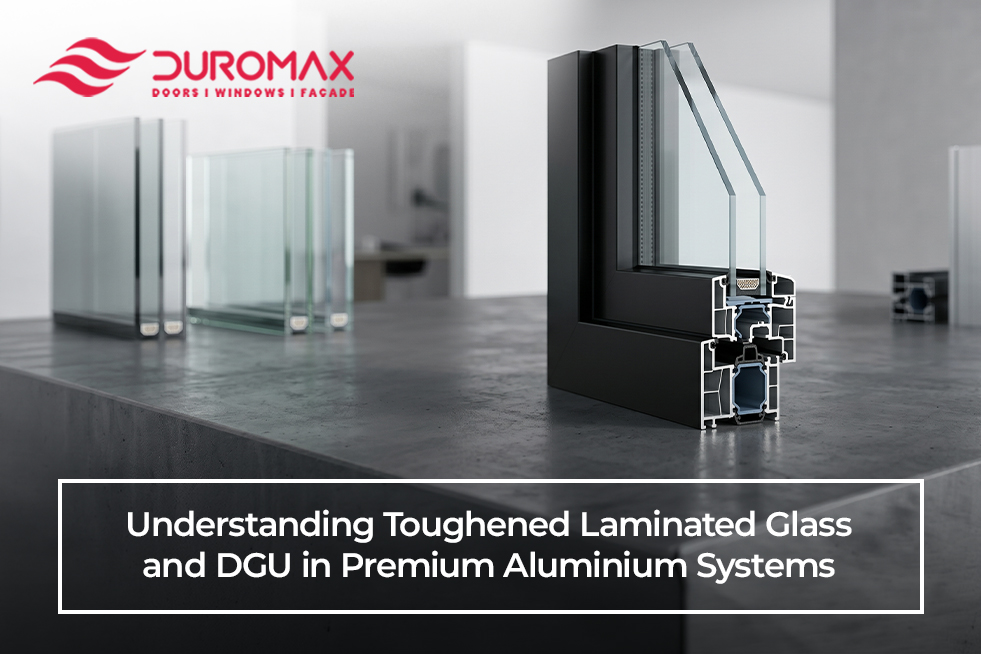
When people invest in premium aluminium windows or sliding door systems the conversation tends to concentrate on the frame, the profile system, the hardware, the colour finish and how the whole thing looks and operates. The glass that goes into those frames gets less attention than it deserves given that it is the largest part of what you are looking through and what the performance of the window or facade actually depends on in terms of thermal comfort, acoustic comfort and safety. The frame holds the glass and seals it and operates it but it is the glass that does most of the actual work of managing heat, light, sound and the physical safety of the people near it.
Glass in fenestration applications has evolved considerably from the single pane of float glass that used to be the default for most residential windows and the options available now sit on a spectrum of performance and cost that is wide enough to be genuinely confusing without some understanding of what the different types are actually doing and why they are specified for different applications.
What Toughened Glass Is and Why It Matters
Toughened glass, also called tempered glass, is standard float glass that has been subjected to a controlled thermal process that changes its internal stress distribution in a way that makes it significantly stronger under load than standard glass and changes how it breaks when it does fail. Standard glass breaks into large sharp fragments that are dangerous. Toughened glass, when it breaks, fragments into small relatively blunt pieces that are far less likely to cause serious injury than the large shards of standard glass. This is why toughened glass is specified for applications where human contact is a realistic possibility, glass doors, large glazed panels at low levels, balustrades and any glazing that people might fall against.
In premium aluminium window and door systems toughened glass is the standard specification for this safety reason rather than an upgrade and the structural strength of toughened glass also means it can span larger areas without the deflection under wind load that standard glass of the same thickness would produce.
Laminated Glass and What the Interlayer Does
Laminated glass takes toughened glass a step further by bonding two or more glass panes together with an interlayer material, typically polyvinyl butyral, in a way that keeps the glass together even when it is broken rather than allowing the fragments to separate. The interlayer holds the broken pieces in place so that a laminated glass panel that has been broken by impact or stress remains in the frame rather than falling as fragments and this property makes it the specification for applications where security, hurricane resistance and overhead glazing safety are considerations.
Toughened laminated glass suppliers in India provide this combined specification for applications like overhead glazing in retractable roof systems where broken glass falling from above would be a serious hazard, for facades where wind-driven debris impact is a design consideration and for security applications where the resistance to forced entry is relevant. The acoustic performance of laminated glass is also better than single pane glass of equivalent thickness because the interlayer damps sound transmission in a way that a uniform glass pane does not.
DGU and How It Changes Thermal Performance
DGU stands for Double Glazed Unit and it is a factory-sealed assembly of two glass panes with a sealed air or gas-filled cavity between them. The cavity acts as a thermal insulating layer and the thermal performance of a DGU is substantially better than a single pane of glass of the same or greater total thickness because the conductive path through the cavity is replaced by a gap filled with a gas that conducts heat poorly. This is the same principle as a thermos flask applied to a window and the result in practice is a window surface on the interior face that is meaningfully warmer in winter and cooler in summer than a single pane would be under the same exterior conditions.
DGU laminated glass combines the insulating cavity of a double glazed unit with the safety and acoustic properties of laminated glass in one assembly and this specification is what premium aluminium systems in high-performance residential and commercial buildings typically use where both thermal performance and safety are required simultaneously rather than one or the other.
The aluminium frame system that holds and seals the DGU is part of the complete performance picture because the thermal break in the profile works together with the DGU to produce an overall facade performance that neither achieves independently. This integration of glass specification and profile specification is something that Duromax considers as part of the system design for the projects they take on rather than treating the glass choice as separate from the frame choice and the result is facades that perform as systems rather than as assembled components.
FAQs
- What is the difference between toughened glass and laminated glass?
Toughened glass is heat-treated to be stronger and to break into small fragments rather than dangerous shards. Laminated glass bonds two panes with an interlayer that holds the glass together when broken. Toughened laminated glass combines both properties for applications requiring strength, safety and fragment retention.
- When is laminated glass specified instead of standard toughened glass?
For overhead glazing applications, facades facing debris impact risk, security applications and anywhere that the glass remains in place after breakage is more important than just the nature of the fragments. Retractable roof systems and high-rise facades are typical applications.
- What does a DGU do that single pane glass cannot?
The sealed cavity between the two panes of a double glazed unit acts as a thermal insulating layer that reduces heat transfer through the glazing significantly. This improves interior comfort and reduces cooling and heating energy costs compared to single pane glass.
- Is DGU laminated glass significantly heavier than single pane toughened glass?
Yes and the frame system needs to be designed to carry the additional weight which is why the glass specification and the aluminium profile specification need to be considered together rather than independently.
- How does the glass specification interact with the aluminium frame system in overall performance?
The thermal break in a quality aluminium profile works with the insulating cavity in a DGU to produce overall facade thermal performance that neither achieves independently. A DGU in a profile without a thermal break or a thermal break profile with single pane glass both lose a significant part of the performance benefit that the combination provides.
 How to Evaluate a Sliding Door Manufacturer for Quality and Performance
  How to Choose Aluminium Windows Manufacturers in India for Your Project
  The Role of Aluminium Window Fabricators in Sustainable Green Building Projects
  How Lift and Slide Aluminium Doors Improve Energy Efficiency and Comfort
  Why Motorised Vertical Retracting Windows Are Replacing Bi-Fold Patio Doors in 2026